
You already know technology matters to your business. That isn’t the question anymore.
The question is where it sits in your thinking. Is it a cost line you try to keep down? Or is it the infrastructure your business actually runs on the same as your kitchen, your supply chain, your people?
Because in 2026, that single distinction is separating the hospitality businesses that grow from the ones quietly falling behind. This guide lays out why, with real numbers, sector-specific figures, and a clear view of what the best operators are doing differently.
Why is technology so important in hospitality right now?
Hospitality has become one of the most technology-dependent industries in the UK. Not because operators went looking for gadgets, because the guest expects it and the margins demand it.
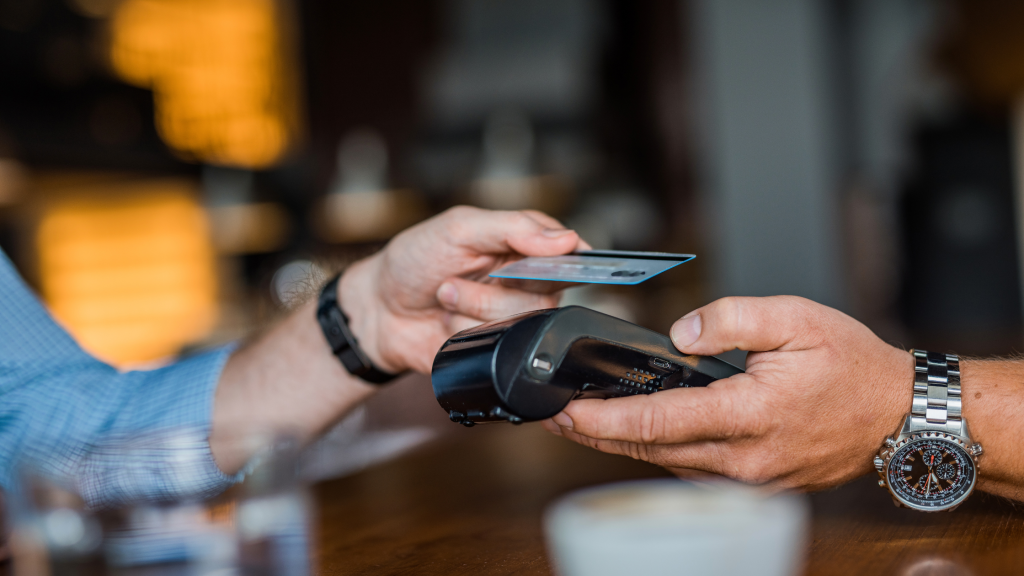
Contactless payment now accounts for the overwhelming majority of in-store card transactions, and hospitality categories like hotels have posted stronger gains than most. Digital booking, dynamic pricing, smart property management and AI-driven personalisation are increasingly what separate the operators outperforming the market from those merely surviving it.
The UK hospitality sector contributes around £93 billion to the economy each year and generates £54 billion in tax receipts, making it the country’s third-largest employer. But it’s under real pressure: rising employment costs, business rates changes, and historically high insolvency rates. In that environment, technology has become the clearest lever operators have to defend margins while raising service, a point made repeatedly across recent PwC and sector analysis.
Here’s the shift in one sentence: technology stopped being how you improve hospitality and became how you run it at all.
The real cost of getting it wrong: what downtime does to a hospitality business
This is where treating IT as a cost line rather than infrastructure shows up, in pounds, on your worst possible night.
When a till goes down mid-service, you don’t lose an even slice of the day’s revenue. You lose the peak of the peak.
Take a mid-size restaurant turning over around £45,000 a week, with roughly half of that landing on Friday and Saturday nights. A two-hour EPOS outage at 7:30pm on a Saturday realistically costs somewhere between £2,500 and £4,500 in covers you can’t turn, drinks you can’t ring through, and tables you apologise out of the door. And that’s just the visible cost. The invisible ones are larger: comped meals to keep regulars sweet, staff overtime to reconcile the night by hand, a finance team spending two days unpicking the cash-up.
The pattern holds across the wider economy, too:
- UK SMEs lose an estimated £3,000 to £5,000 per hour to IT downtime once all knock-on losses are counted.
- The average UK small business loses around £7,500 a year and nearly 19 hours of productivity to unplanned downtime.
- UK micro and small businesses collectively lost £2.7 billion to internet downtime alone, around 72% of the country’s total downtime cost.
Now layer hospitality’s specifics on top. Your systems fail during service, not during quiet admin hours. Your customers walk to the place across the road rather than wait. And a payment failure isn’t forgotten: research shows a meaningful share of customers who hit a payment problem simply don’t come back within the month.
That’s the thing about downtime in hospitality. The lost covers are recoverable in theory. The regular who quietly decides to try somewhere else is not.
Cybersecurity: hospitality is now a top target, not an afterthought
If downtime is the operational risk, cyber is the existential one, and hospitality sits squarely in the crosshairs.
The sector holds exactly what attackers want: payment card data, passports, personal guest details, loyalty accounts, all flowing through booking platforms, PMS systems and payment terminals. The numbers reflect it:
- Around 31% of hospitality businesses have experienced a data breach, and of those, 89% suffered repeat breaches, at an average cost of $3.4 million each.
- Ransomware featured in 44% of hospitality breaches in the 2025 Verizon Data Breach Investigations Report.
- In one recent survey, 82% of North American hotels experienced a successful breach in a single summer, with 58% hit five or more times and nearly half reporting downtime beyond 12 hours.
- Roughly 32% of 2025 cyberattacks trace back to known, unpatched vulnerabilities, outdated systems that a proactive IT partner would have closed off.
Guest-facing technology is the most exposed layer of all: payment and POS systems, guest Wi-Fi, and front-desk systems top the risk list. And the UK doesn’t sit this out, it’s among the most-targeted countries for hospitality ransomware globally.
The uncomfortable truth is that much of this is preventable. Unpatched software, weak access controls and untested backups are not sophisticated attacker techniques, they’re open doors. Frameworks like Cyber Essentials, backed by the UK’s National Cyber Security Centre, exist precisely to shut them. Treating security as infrastructure means those doors are closed before anyone tries the handle. Treating it as a cost line means they stay open until someone walks through.
What the best hospitality groups do differently
Here’s what’s easy to miss in all these numbers: the best-run hospitality groups don’t necessarily spend more on technology. They file it somewhere different.
For them, IT doesn’t sit under overheads as a line to trim. It sits beside the kitchen and the supply chain, part of how the business runs, every service, every site. That one categorisation changes every decision downstream.
It shows up in four places:
1. Reliability is designed in, not hoped for
The best operators treat uptime as a standard to hit, not luck to be grateful for. Redundant connectivity, proactive monitoring, and fast support mean a frozen till gets caught and handled before it becomes a lost Saturday, often before staff even notice.
2. Every new site opens ready
When you run IT as infrastructure, growth stops being the risky part. The next location launches on the same standard as the last one, rather than being held together by hope on opening day. For multi-site operators, that consistency is the whole game.
3. Guest experience stays consistent everywhere
Digital booking, contactless payment, guest Wi-Fi, personalisation, guests now expect these to just work, at every site, every time. Consistency across locations is only possible when the underlying technology is managed as one system, not five separate ones.
4. Technology becomes a margin lever, not a cost
With reliability handled, operators can actually use technology to defend margins: dynamic pricing, AI-assisted scheduling, demand forecasting, automated invoice processing. Industry analysis is clear that operators investing in digital capability are the ones positioned to thrive, while those slow to adapt risk being left behind.
None of this requires a bigger budget than the operator down the road. It requires a different decision about what IT is.
How to tell where your business currently sits
You don’t need an audit to get a first read. Ask yourself a few honest questions:
- When did your EPOS, Wi-Fi or payment systems last go down during service, and how long did it take to fix?
- If a ransomware email landed in a team members inbox tomorrow, are you confident it would be stopped?
- When you open your next site, does IT get set up to the same standard as your best-performing location, or improvised on the day?
- Do you know, roughly, what an hour of downtime actually costs you on a Saturday night?
- Is your IT support contract “next business day” which, in hospitality, is another way of saying “you lost the weekend”?
If those questions are uncomfortable to answer, that’s the signal. IT is currently sitting on your cost line, and it’s quietly shaping how far and how fast you can grow.
The bottom line
Technology in hospitality isn’t important because it’s modern or because everyone’s talking about AI. It’s important because it now decides two things you care about most: whether your business runs reliably tonight, and whether it can grow without breaking.
The best operators worked this out already. They stopped treating IT as an expense to minimise and started treating it as the infrastructure their business is built on. Everything else, the reliability, the smooth openings, the consistent guest experience, the protected margins, follows from that one decision.
The only real question left is which column IT sits in for you.
Not sure where your business stands?
We work with hospitality groups across the UK to run IT as infrastructure, reliable during service, secure against the threats above, and consistent across every site. If you’re growing and want to know where your gaps are, book a free 30-minute IT review. No jargon, no pressure, just a straight read on where you stand.
Book a free IT review → or call 0330 313 0966.
Related reading
- How IT Downtime Costs Hospitality Businesses More Than They Realise
- Hotel and Venue IT: Why General IT Support Isn’t Enough
- IT Support for Multi-Site Hospitality Businesses: The Cirrus Approach
Written by the Cirrus Technology Solutions team 10+ years supporting hospitality businesses across the UK. Questions? Call 0330 313 0966.